


 BACK
BACK
BLOGS
RESOURCES
FMEA Alignment VDA and AIAG
14 FEB 2019


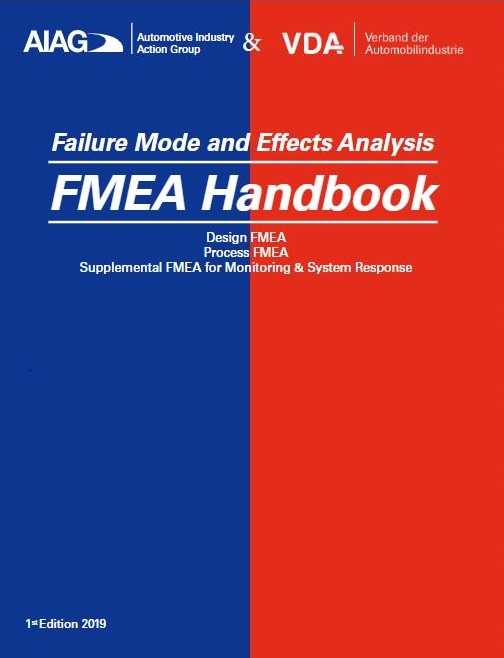
UPDATED 12th June 2019: Failure Mode and Effects Analysis (FMEA) is a cross functional systematic and analytic process to identify, analyse and mitigate risk related to product design and  manufacturing.When used correctly it fully supports Advanced Product Quality Planning (APQP), and improves customer satisfaction through emphasising defect prevention.In addition IATF 16949 requires that organisations assess the risk within Product and Process Design and development stages.This is detailed in the following specific clauses3.2.1 Design and development planning:-
 This approach is seen to be more structured and so assists cross functional teams to be more effective and efficient in the use of FMEA.The first step of planning & preparation contains enhanced directions and has increased focus to improve clarity and understanding of the FMEA activity across cross functional teams. This reduces time wasted later due to lack of full team understanding.Other changes in the joint AIAG/VDA handbook include increased criteria specificity, increased focus on incorporating past lessons learned and improved linkages to The Cost of Quality (COQ).Next StepsIf you are currently using AIAG FMEA 4th Edition or VDA 4, read and understand the new AIAG & VDA handbook as soon as possible. Some things have stayed the same but many things have changed. The publication is now available via our web shop.If you identify gaps in your current FMEA process ensure adequate training is provided to your cross functional teams employed in developing FMEAs.Confirm your customer specific requirements and incorporate these into all of your actions.Pilot, implement and then standardise the new business process.Industry Forum is running both awareness and practitioner training so if you would like to find out more please view the relevant course pages. You can also sign up for FMEA updates direct to your inbox.
 manufacturing.When used correctly it fully supports Advanced Product Quality Planning (APQP), and improves customer satisfaction through emphasising defect prevention.In addition IATF 16949 requires that organisations assess the risk within Product and Process Design and development stages.This is detailed in the following specific clauses3.2.1 Design and development planning:-
- c) Development and review of product design risk analysis (FMEA’s) include action to reduce potential risk.
- a) design risk analysis (FMEA)
- g) Manufacturing process FMEA.
 This approach is seen to be more structured and so assists cross functional teams to be more effective and efficient in the use of FMEA.The first step of planning & preparation contains enhanced directions and has increased focus to improve clarity and understanding of the FMEA activity across cross functional teams. This reduces time wasted later due to lack of full team understanding.Other changes in the joint AIAG/VDA handbook include increased criteria specificity, increased focus on incorporating past lessons learned and improved linkages to The Cost of Quality (COQ).Next StepsIf you are currently using AIAG FMEA 4th Edition or VDA 4, read and understand the new AIAG & VDA handbook as soon as possible. Some things have stayed the same but many things have changed. The publication is now available via our web shop.If you identify gaps in your current FMEA process ensure adequate training is provided to your cross functional teams employed in developing FMEAs.Confirm your customer specific requirements and incorporate these into all of your actions.Pilot, implement and then standardise the new business process.Industry Forum is running both awareness and practitioner training so if you would like to find out more please view the relevant course pages. You can also sign up for FMEA updates direct to your inbox.
 Relevant courses
AIAG/VDA Combined FMEA Awareness Training (1 Day)
AIAG & VDA Process FMEA: Transitioning for Practitioners (2 Day)
Failure Mode and Effects Analysis (FMEA) Training (1 Day) – AIAG 4th edition
Useful resource
VDA and AIAG FMEA Alignment – FAQs
VIEW MORE RESOURCES
IN OTHER NEWS







 BACK
BACK 

 CONTINUE TO CHECKOUT

